








|
|
|
|
|
|
|
|
|
The divided back postcard dates from 1904 before then only the address could be written on the back.
  | A fraction of one percent of portrait postcards were actually sent with a postage stamp through the mail.
If they were, the postmark date will hopefully be legible. Many more were sent enclosed in an envelope and the postmark shows only as a circular indent.
More often than you would imagine held at the right angle, in the right light, dates can still be read from these. Stamps of the following value and design were applied to Inland Postcards as shown. | |||||||||||||||||||
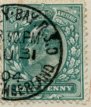 1902-1904 • King Edward VII - "blue green" halfpenny postage stamp 1902-1904 • King Edward VII - "blue green" halfpenny postage stamp |
 1904-1910 • King Edward VII - "yellow green" halfpenny postage stamp 1904-1910 • King Edward VII - "yellow green" halfpenny postage stamp |
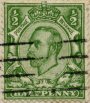 1911-1912 • King George V - "Downey" ¾ Face halfpenny postage stamp 1911-1912 • King George V - "Downey" ¾ Face halfpenny postage stamp |
 1912-1918 • King George V - "Profile" halfpenny postage stamp 1912-1918 • King George V - "Profile" halfpenny postage stamp |
| In 1918 a postcard stamp was doubled to one penny |
 1918-1921 • King George V - "red" penny postage stamp 1918-1921 • King George V - "red" penny postage stamp |
| In 1921 the postage was increased to one penny halfpenny |
 1921-1922 • King George V - "brown" three-halfpenny postage stamp 1921-1922 • King George V - "brown" three-halfpenny postage stamp |
| In 1922 it was reduced back to one penny |
| 1922-1934 • The same King George V - "red" penny postage stamp |
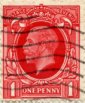 1934-1936 • King George V - "dark oval" penny postage stamp 1934-1936 • King George V - "dark oval" penny postage stamp |
 1936 • (Abdicated) Edward VIII - "uncrowned" penny postage stamp 1936 • (Abdicated) Edward VIII - "uncrowned" penny postage stamp |
 1937-40 • King George VI penny postage stamp 1937-40 • King George VI penny postage stamp |
| In 1940 a postcard stamp was doubled to two pence |
 1940-41 • King George VI "dark orange" twopenny postage stamp 1940-41 • King George VI "dark orange" twopenny postage stamp |
 1941-50 • King George VI "pale orange" twopenny postage stamp 1941-50 • King George VI "pale orange" twopenny postage stamp |
 1950-52 • King George VI
"pale brown" twopenny postage stamp 1950-52 • King George VI
"pale brown" twopenny postage stamp |
The increase in postage plus the introduction of purchase tax on postcards in 1940 ended the standard use of this format by most photographers. |
Of course combinations of halfpenny and one penny stamps could be used for the higher postage rates.
The postcard is by far the most frequent format you will see for family studio portraits.